
News
Rioja in Forbes: How Barrel Strategy Is Evolving Across the Region
A recent Forbes article highlights a critical shift underway in Rioja: not the abandonment of oak, but a recalibration of how wood—and alternative vessels—are used to shape style, structure, and market relevance.

For trade professionals, the takeaway is clear. Rioja’s historical identity remains intact, but its barrel methodology has diversified, giving buyers and sommeliers more stylistic range to work with across price tiers, aging categories, and on-premise programs.
Why American Oak Defined Rioja—And Why It Still Matters
American oak has been central to Rioja since the 19th century for two primary reasons: availability and functional compatibility with Tempranillo.
As noted in the Forbes feature, American oak provided a consistent supply at scale and delivered aromatic compounds—vanillin, lactones, sweet spice—that aligned with Rioja’s blended, Tempranillo-driven wines. These attributes supported longer aging regimes and became foundational to the crianza, reserva, and gran reserva system.
From a trade perspective, American oak continues to:
- Anchor traditional Rioja styles
- Deliver familiarity and reliability for established markets
- Support wines designed for extended aging and cellaring
Producers interviewed in the article—including Ramón Bilbao and Bodegas RODA—agree that American oak is not disappearing. Its role, however, is becoming more targeted and intentional.
French Oak and Precision Styling
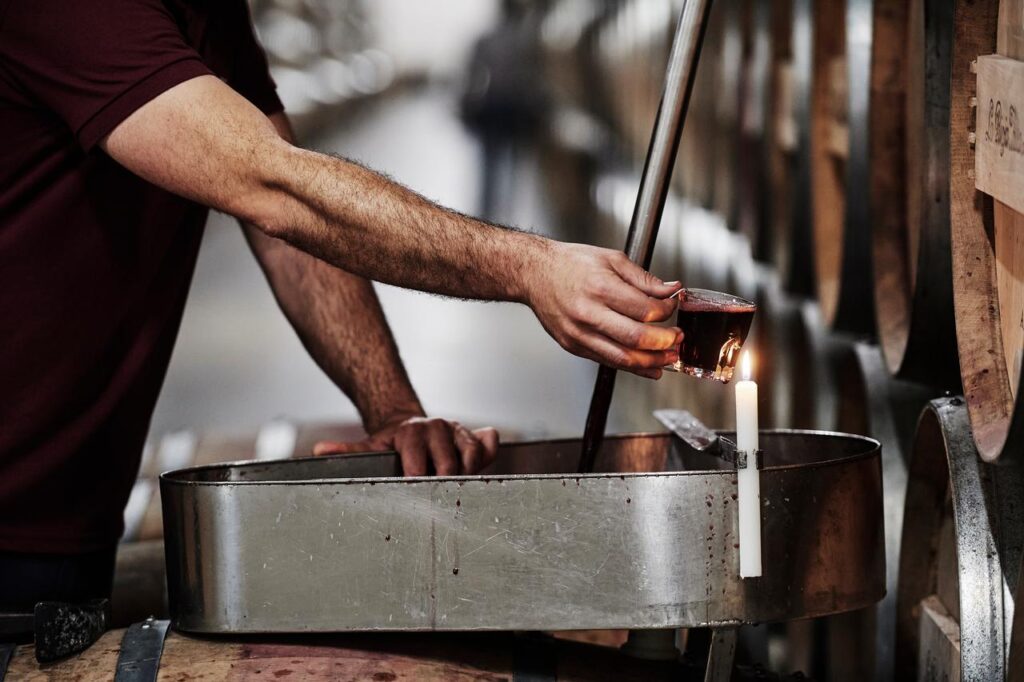
French oak has expanded its footprint in Rioja as producers pursue greater precision, structure, and fruit definition.
In the Forbes article, Ramón Bilbao notes that French oak is used for wines with darker fruit profiles and increased concentration, where tighter grain and subtler aromatic transfer enhance complexity without dominating the wine.
For trade buyers, French oak–aged Rioja often signals:
- A more international stylistic profile
- Compatibility with fine-dining programs
- A bridge for consumers familiar with Burgundy, Bordeaux, or premium New World wines
At Bodegas RODA, French oak has been the exclusive choice since the winery’s founding, reflecting a long-standing philosophy that prioritizes terroir expression over overt wood influence.
Concrete, Amphorae, and Larger Formats: Tools, Not Trends
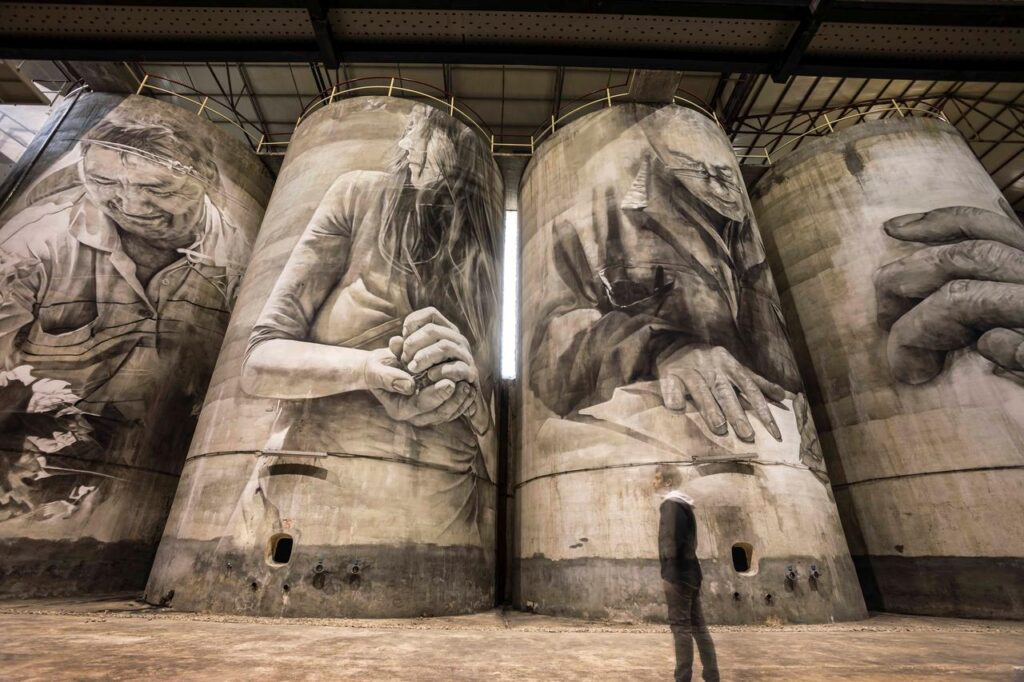
One of the most relevant trade insights from the article is the normalization of non-oak vessels in Rioja.
Concrete and amphorae are increasingly used to:
- Preserve fruit purity
- Enhance mid-palate texture
- Allow controlled oxygen exchange without aromatic imprint
Producers emphasize that these vessels are not positioned as “modern” or “anti-traditional,” but as alternatives that deliver different outcomes. Larger-format barrels (e.g., 500-liter bocoyes) similarly reduce oak impact while maintaining aging benefits.
For the trade, these wines offer:
- Fresher, earlier-drinking options
- Greater by-the-glass versatility
- Strong alignment with current sommelier preferences for balance and drinkability
Generational Shifts in Winemaking Philosophy
The Forbes piece underscores a broader generational evolution within Rioja. Younger winemakers are prioritizing:
- Earlier harvests
- Gentler extraction
- Reduced new oak percentages
- Alternative fermentation and aging vessels
This shift supports wines with length over volume, acidity over power, and site expression over barrel signature. These profiles often align better with contemporary restaurant programs and evolving consumer demand.
Market Implications for Buyers and Sommeliers
From a commercial standpoint, Rioja’s diversification in barrel strategy expands its relevance across markets.
Key implications:
- Traditional oak-forward Rioja continues to perform strongly in established markets
- Fresher, minimally oaked styles resonate with newer wine consumers
- Importers and distributors can now position Rioja across a wider stylistic spectrum without leaving the region
As noted in the article, the vessel itself is no longer the selling point—the outcome in the glass is.
Where This Leaves Rioja’s Aging Classifications
Rioja’s time-based classifications remain effective for traditional styles but are less descriptive for wines aged in concrete, amphorae, or larger vessels.
Rather than replacing the system, producers are working alongside it—using:
- Village and single-vineyard designations
- Alternative aging formats
- Transparent production narratives
For the trade, this means more nuanced storytelling and clearer alignment between wine style and placement.
Key Takeaway for the Trade
Rioja’s oak story has evolved from a singular tradition into a portfolio of deliberate choices.
American oak remains foundational. French oak adds precision. Concrete and amphorae provide texture and purity. Together, they allow Rioja to serve multiple channels, markets, and consumption occasions—without compromising identity.
As highlighted in Forbes, Rioja’s future is not defined by a single vessel, but by its ability to match method to intent.